English| EUR
Suggested for you
More currencies
Choose a language
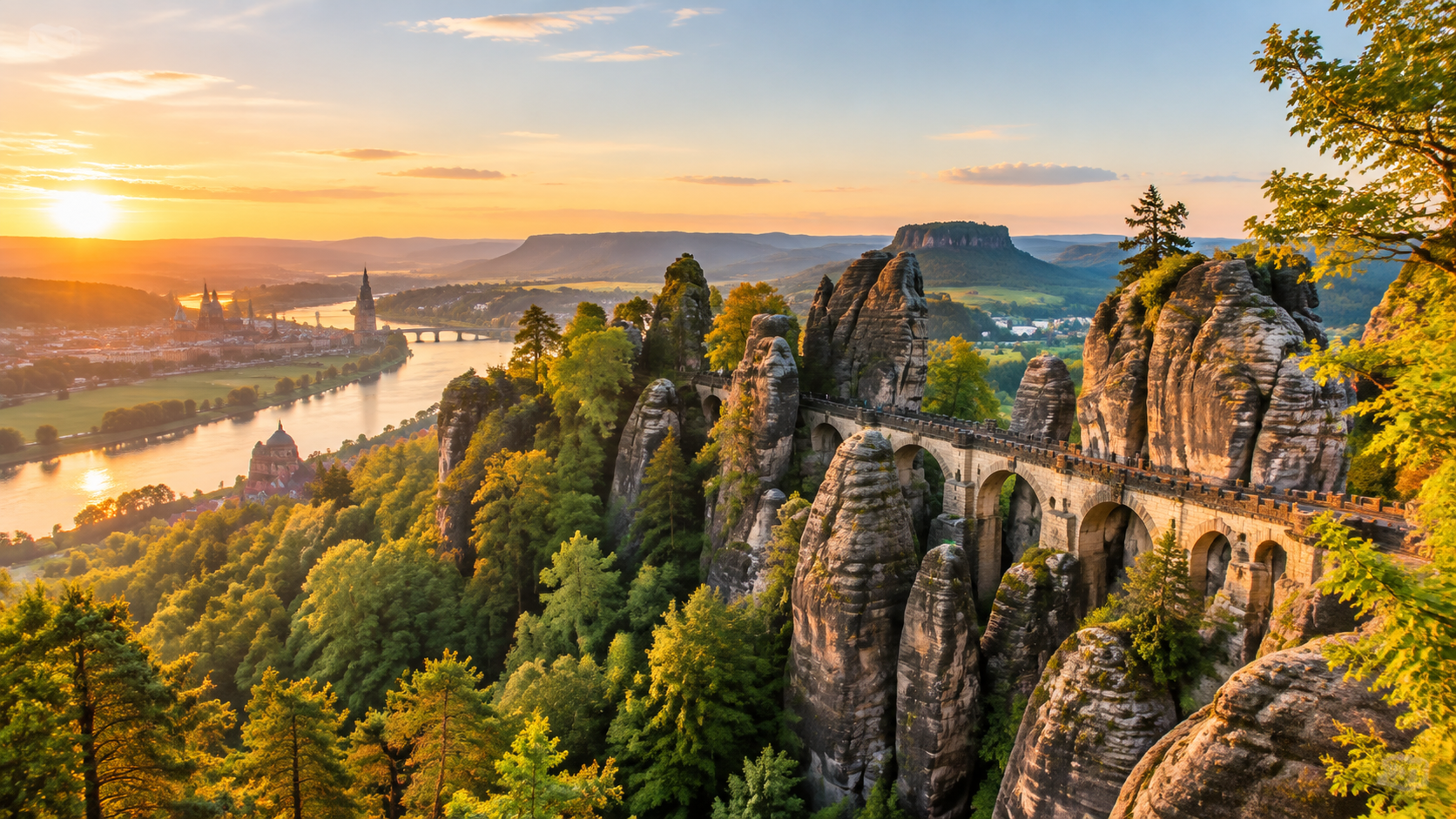
The Bastei Bridge sits 194 meters above the Elbe River, accessed via three distinct transport chains from Dresden. Each route combines rail, road and footpath in different proportions, and the choice you make determines whether you arrive via valley ferry or ridge-top car park.
Quick answer
How to get to Bastei Bridge from Dresden starts with the S1 train from Dresden Hauptbahnhof to Kurort Rathen, a 35-minute journey departing every 30 minutes. From Rathen station, a two-minute Elbe ferry crossing delivers you to the trailhead; the marked Basteiweg climb then takes 30 to 45 minutes through beech forest. Alternatively, drive 38 kilometers southeast to the Bastei car park, arriving via Lohmen, where the bridge stands 500 meters from the parking area.
The Bastei rock formation predates the bridge by millennia, but human access remained limited until the 19th century when the first wooden footbridge opened to connect the pinnacles. Today's sandstone structure, completed in 1851, transformed a difficult scramble into a walkable loop, yet the approach from Dresden still demands careful planning — no single vehicle delivers you door-to-door. The S-Bahn route via Rathen anchors the public transport chain. Trains leave Dresden Hauptbahnhof twice hourly, following the Elbe upstream through Saxon Switzerland. The 35-minute ride deposits passengers on the river's left bank, where the Bastei rises on the opposite side. A hand-operated ferry shuttles foot traffic across the water every few minutes during daylight hours, landing at the village of Rathen proper. From the ferry dock, yellow trail markers guide hikers up a stone staircase and switchback path carved into the slope. The ascent gains 190 vertical meters over 1.4 kilometers, emerging at the Bastei plateau where the bridge arches across the void. Drivers bypass the ferry and climb but inherit a different constraint: parking capacity near the bridge remains limited to a single multi-level facility off Basteistraße in Lohmen. The lot fills by mid-morning on weekends between April and October, forcing overflow vehicles down the mountain to seek space in valley villages. From Dresden city center, the 38-kilometer drive follows the S172 south through Pirna, then branches east on narrower roads threading the national park. Navigation systems route you correctly, but the final approach consists of tight curves with no shoulder — coaches and campervans require advance clearance. A third option splits the difference: drive to Rathen, park in the village lot near the train station, and complete the ferry-plus-hike sequence on foot. This hybrid reduces driving time while avoiding the Bastei summit's parking scarcity, though village spaces also disappear by late morning in high season. Whichever chain you select, early departure from Dresden — before 08:00 — grants access before crowds compress the trails and viewpoints. The bridge itself never closes, remaining accessible around the clock, but the ferry operates daylight hours only, suspending service after dusk and in winter ice conditions.
“The 35-minute S-Bahn ride deposits passengers on the river's left bank, where the Bastei rises on the opposite side.”
The Bastei Bridge is located in the Saxon Switzerland National Park, accessible primarily via the town of Kurort Rathen. The most common route from Dresden involves a combination of regional rail and a short river crossing.
S-Bahn S1 to Kurort Rathen, then ferry across the Elbe
Bus 237 from Pirna to Bastei/Panoramahotel
A17 motorway towards Bastei-Straße, Lohmen
Upon arriving at the Kurort Rathen train station, follow signs to the ferry terminal for a direct river crossing; from there, it is a steady 30-45 minute hike uphill to reach the bridge.
The Bastei Bridge is accessible 24/7, with early morning and sunset hours providing the most favorable conditions for photography and crowd avoidance. Visiting outside of peak midday traffic allows for a more controlled experience of the site.
—
Fewer visitors arrive before 09:00, providing quieter access to the bridge.
Mild temperatures, 15°C to 25°C
Longer daylight hours allow for flexible arrival, though midday is crowded.
Cooler, 5°C to 15°C
These shoulder months offer thinner crowds and consistent weather for walking.
—
The bridge remains accessible, and lower light levels reduce the volume of day-trippers.
Verdict: The best time to visit is Tuesday to Thursday during early morning hours in April or October to ensure the lowest crowd density.
The Bastei Bridge is accessible to visitors at all times throughout the week. It remains open daily, including weekends and public holidays.
Pack light but cover the essentials for the journey from Dresden and the walk across the bridge.
Everything you need to know about how to get to bastei bridge from dresden
You can travel from Dresden Hauptbahnhof to Kurort Rathen via regional train, which takes approximately 30 to 40 minutes. From the Rathen train station, a short ferry ride across the Elbe river connects you to the base of the trail leading to the sandstone peaks.
There is an entrance fee of 0 EUR for the bridge. Access is completely free for all visitors and no tickets are required.
To avoid crowds, consider early morning or sunset arrivals when the lighting is ideal for photography. This Saxon Switzerland landmark is open 24/7, offering flexibility for your travel schedule when considering how to get to bastei bridge from dresden.
The site maintains opening hours of 00:00–23:59 every day of the week. This accessibility allows visitors to experience the geological wonder at any hour.
The journey from central Dresden to the trail head typically requires about one hour of travel time by public transport. Once you arrive at the Bastei, expect to spend additional time hiking through the rugged sandstone landscape typical of this UNESCO-recognized region.
Yes, the path is generally suitable for families, though sturdy footwear is recommended for the rocky terrain. Exploring this iconic piece of the Elbe Sandstone Mountains is a manageable day trip for most ages.
Many travelers fail to check the regional train schedules in advance, which can lead to longer wait times at the ferry crossing. Planning your route thoroughly ensures a smoother experience when figuring out how to get to bastei bridge from dresden.